

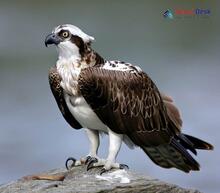


The majestic Pandion genus, consisting of the well-known Osprey or Sea Hawk, has captured the fascination of bird enthusiasts and researchers alike. With its distinct origin, evolutionary history, taxonomy, morphology, and ecology, the Pandion genus stands out as a uniquely fascinating raptor. In this article, we'll explore these various aspects while also shedding light on its presence in Nepal.
Origin and Evolution Chain
Believed to have originated around 22.4 - 24.1 million years ago during the Miocene epoch, the Pandion genus has an intriguing evolutionary heritage. The fossil record offers limited information on their early ancestors; thus far, one significant find includes the extinct species Pandion homalopteron from North America and Europe.
Taxonomy: A Unique Raptor
The taxonomy of the Pandion genus is particularly interesting because it includes only one extant species: Pandion haliaetus. This species further divides into four subspecies, each featuring slight variations in size and coloration. The unique taxonomic standing of the Pandion haliaetus is evidenced by its belonging to a separate family (Pandionidae) and forming a monotypic order (Pandioniformes).
Morphology: Adaptations for Success
The morphology of the Osprey sets it apart from other birds of prey. Sporting long wings with a wingspan ranging between 5 and 6 feet (1.5 - 1.8 meters), this raptor is distinctly adapted for its piscivorous lifestyle. Its talons are large, and curved, and possess reversible outer toes that allow for an unparalleled grip on slippery fish. Additionally, their nostrils can be closed during dives to prevent water from entering.
Ecology: A Global Hunter
Ospreys demonstrate an impressive ecological range as they inhabit various locations across the globe, including Europe, Asia, Africa, North and South America, and Australia. They are known to nest near bodies of water like rivers, lakes, or coastlines and have a diet predominantly consisting of live fish. As migratory birds, they embark on long seasonal journeys between their breeding and wintering grounds.
Presence in Nepal: A Raptor's Haven
Nepal serves as a significant habitat for the Ospreys during the migration period. Birdwatchers and researchers can observe these incredible raptors in various locations within the country, including Chitwan National Park, Bardia National Park, Sukla Phanta Wildlife Reserve, and Koshi Tappu Wildlife Reserve. Their striking presence in Nepal highlights the country's rich biodiversity and the importance of conservation efforts to protect these remarkable birds.
In conclusion, the Pandion genus stands as a testament to the wonders of evolution and adaptation evident in nature. By understanding its origin, taxonomy, morphology, ecology, and presence in regions such as Nepal, we gain valuable insights into this incredible raptor species while promoting a greater appreciation for biodiversity on a global scale.