

The Ceryle genus may not be a household name, but this group of fascinating birds has captured the attention of ornithologists and bird enthusiasts worldwide. With their distinct appearance and impressive fishing skills, it's no wonder they have become a topic of interest in bird studies. In this article, we'll dive deep into the evolution tree, taxonomy, morphology, and ecology of Ceryle genus birds and their presence in the beautiful country of Nepal.
The Evolutionary Tree and Taxonomy
The Ceryle genus belongs to the family Alcedinidae, commonly known as kingfishers. While there are over 90 species of kingfishers worldwide, the Ceryle genus features only three members: the Belted Kingfisher (Ceryle alcyon), the Amazon Kingfisher (Ceryle amazona), and the Ringed Kingfisher (Ceryle torquata).
These captivating birds share a similar evolutionary lineage with other kingfishers but have evolved particular characteristics that set them apart from their relatives. It is believed that Ceryle genus birds first emerged in South America and gradually diversified into various parts of North America and Asia.
Morphological Marvels
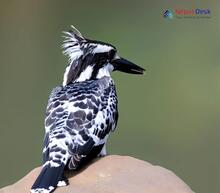
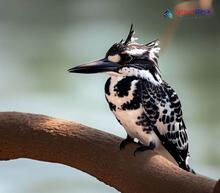
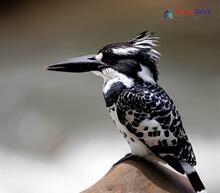
Ceryle genus members share striking physical features such as a large head, a long, dagger-shaped bill adapted for catching fish, short legs with strong claws, and crested plumage. Their bold color patterns make them easily identifiable among other birds sharing their ecosystems. Belted Kingfishers sport a unique head crest combined with a blueish-grey body with white spots on the wings and tail. Both Amazon and Ringed Kingfishers exhibit brilliant green-blue plumage adorned with white collars (rings) around their necks – hence the name "Ringed" Kingfisher.
Ecological Dynamics
Known for their undeniable prowess in fishing, Ceryle genus birds thrive in environments close to water sources such as rivers, lakes, and ponds. Their keen eyesight enables them to locate prey with precision from high perches before plunging into the water with astonishing speed. These efficient predators mainly feed on fish and crustaceans, although they have been known to occasionally consume insects, small mammals, and amphibians. Given their dietary preferences and habitat requirements, maintaining a healthy aquatic environment is essential for the survival and well-being of Ceryle genus birds.
Ceryle Genus Birds of Nepal
Nepal, a landlocked country nestled between India and China, boasts impressive biodiversity owing to its unique topographical features. This Himalayan nation is home to various species of kingfishers, including Belted Kingfishers from the Ceryle genus. These fascinating birds can be spotted near rivers and other bodies of water throughout Nepal.
In conclusion, the Ceryle genus holds great interest in terms of its evolution tree, taxonomy, morphology, ecology, and presence within diverse ecosystems worldwide. Ensuring the preservation of these striking birds is crucial for maintaining ecological balance and celebrating the incredible richness of our planet's biodiversity.